
Socialhyp
September 18, 2026
How AI Can Help Businesses Build Smarter Mobile Applications
Smartphones are the primary touchpoint for modern consumers. People use apps to shop, manage money, and order everyday services. They expect fast, simple, and personal experiences. Traditional mobile app development struggles to keep up with these needs. That is where AI in mobile app development makes a real difference.
Artificial intelligence turns static software into helpful digital tools. By using AI in mobile app development, companies can track user actions, predict needs, and simplify everyday tasks. At Social Hyp, we build intelligent mobile apps that keep customers happy and boost business growth.
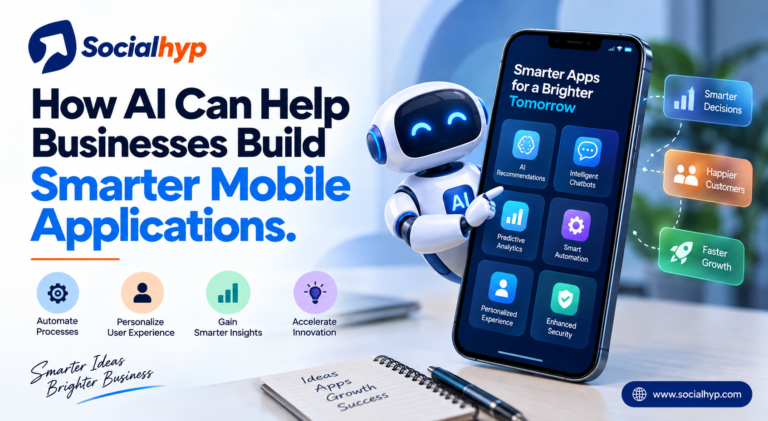
The Shift Toward Smarter Mobile Applications
Standard mobile apps follow rigid rules. A user taps a button, and a pre-set action happens. This system works for basic tasks, but modern users want more help.
Smarter applications adapt to individual habits. Every time someone uses an app, intelligent systems study that activity. They use those details to improve search results, suggestions, and layouts. Adding AI in mobile app development closes the gap between simple tools and real solutions.
Key Benefits of AI in Mobile App Development
Adding smart tools to mobile software brings clear advantages for growing companies.
1. Tailored User Experiences
Generic screens confuse users. Intelligent systems study browsing habits, past buys, and locations to customize app layouts. When an app displays relevant items on the home screen, users stay active longer.
2. Faster Launches and Lower Costs
Writing app code by hand takes months. Software teams now use AI in mobile app development to create routine code, run tests, and fix bugs quickly. Faster testing helps brands launch apps earlier and spend less money.
3. Clear Search and Discovery
Basic search bars fail when users make typos or type broad words. Modern artificial intelligence apps read intent, context, and word meanings. Voice search and image search allow people to find products by taking photos.
6 High-Impact AI Features for Business Apps
Adding smart capabilities gives your business a firm advantage. Here are six essential AI app features transforming mobile software:
1. Automated Chatbot Integration
Customer help needs to be instant. Through chatbot integration, apps provide instant support at any hour. Smart bots handle returns, answer questions, and book services without long hold times.
2. Data-Driven Predictive Analytics
Knowing what customers want next helps businesses grow. Using predictive analytics helps apps spot sales trends and keep users interested. Shopping apps use these predictions to suggest products before users start searching.
3. Streamlined App Automation
Manual steps waste valuable time. Adding app automation simplifies routine tasks like typing data, sorting receipts, and sending alerts. This speed keeps operations accurate and quick.
4. Advanced Machine Learning Algorithms
At the core of smart software are machine learning apps designed to review data continuously. These programs improve store suggestions, catch fake accounts, and speed up load times.
5. Quick Biometrics
App security matters to everyone. Smart scans—like face matching and fingerprint checks—log users in fast while keeping personal data safe.
6. Dynamic Content Engines
Apps do not need to show the same banner to every customer. Smart systems update deals based on a user's location, local time, and current habits.
How Industries Use AI Mobile Apps
Companies use AI in mobile app development in different ways across markets:
- Retail: Stores use photo search, instant chat support, and dynamic deals to increase sales.
- Healthcare: Modern AI mobile apps help patients track health metrics, set appointments, and receive medicine reminders.
- Finance: Banks depend on machine learning apps to stop fraud, check loan risks, and give budgeting advice.
- Delivery: Logistics teams use smart models to pick fast driver routes and update delivery times.
How Social Hyp Helps You Build Smarter Mobile Apps
Building a smart app takes clear plans, skilled engineering, and clean design. At Social Hyp, our team helps businesses use AI in mobile app development step by step.
Here is how we build intelligent software:
- Strategic Discovery: We review your business steps to find where automated tools will bring high value.
- Custom Model Training: We train smart algorithms that fit directly into your software without slowing down speed.
- Simple App Design: Our designers keep smart tools simple so users find them easy to navigate.
- Complete Setup: From chatbot integration to sales engines, we build durable mobile apps made for growth.
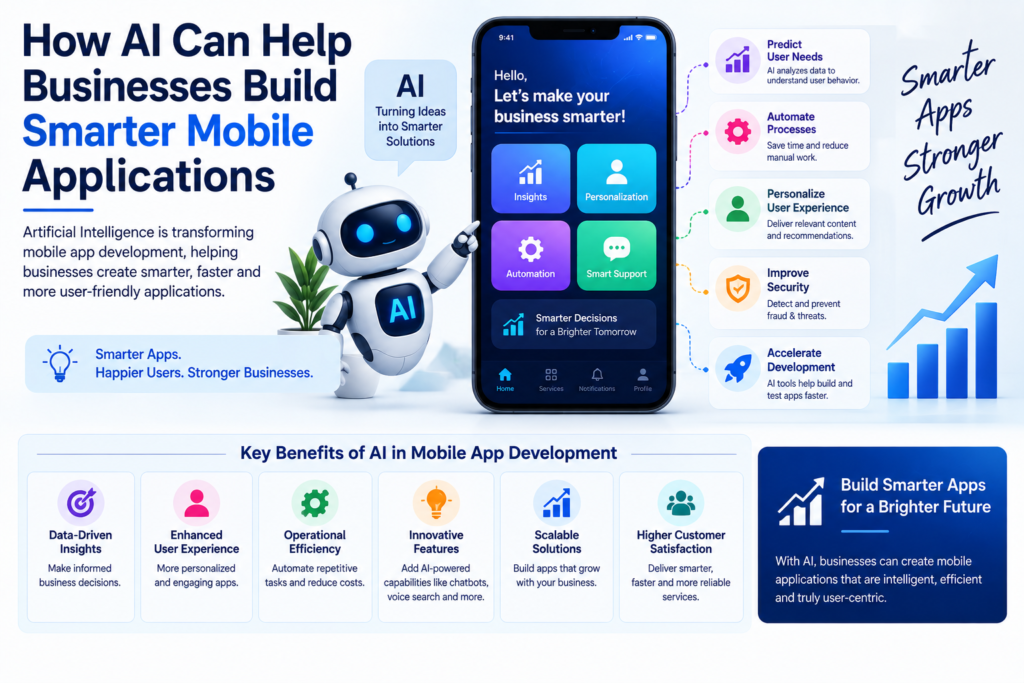
The Future of AI in Mobile Development
Mobile phones can now handle complex tasks directly on the device. This local processing means apps run smart tools offline, respond faster, and protect user data better.
Businesses that create AI mobile apps today build strong positions in their market. Companies sticking to older systems risk losing ground to faster competitors.
 Visit Socialhyp.com and start your digital transformation today!
Frequently Asked Questions (FAQs)
AI reviews user habits and past choices to offer relevant product ideas, dynamic content, and instant answers. This personal care keeps people using the app regularly.
Custom models take effort, but ready-made cloud tools make artificial intelligence apps affordable. Adding helpful AI app features like quick chatbots lowers long-term support costs.
Adding chatbot integration means your app answers questions all day without hiring extra staff. Virtual bots guide shoppers, fix simple issues, and submit tickets directly inside the app.
By using predictive analytics, businesses study user habits to plan inventory, lower drop-off rates, and send timely offers that convert into sales.
Smart app automation handles repetitive work like account sign-ups, data updates, and push alerts. This cuts manual work, avoids human mistakes, and speeds up service.