
Socialhyp
August 6, 2026
How to Create EEAT-Friendly Content That Google Trusts
Creating strong website articles today requires more than just repeating search terms on a page. At Social Hyp, we focus on building real connections with your readers while meeting search engine rules. Search engines prioritize material that shows genuine human knowledge, clear facts, and strong reliability. If you want your site to perform well in search results, creating reliable EEAT content is the single best strategy you can use.
In this guide, we break down what search reviewers look for, how to share real experience, and how to build lasting authority online.

What is Google EEAT and Why Does It Matter?
You need to know Google EEAT to improve online visibility.
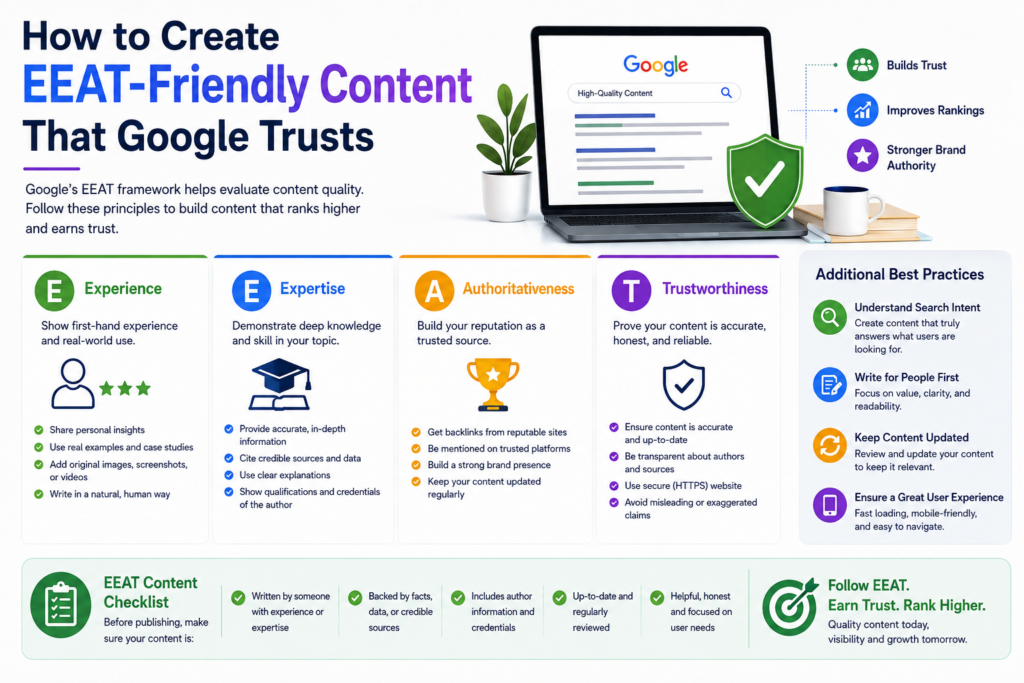
Experience, Expertise, Authoritativeness, and Trustworthiness are the Q and A's Google uses for human reviewers to determine if a page is a safe and valuable place for people. Not an actual ranking metric, but it does describe how search systems rank sites based on a user's wellbeing and trust.
To simplify:
Experience: The author has personal experience with the topic?
Expertise: The author has formal training in the topic?
Authoritativeness: The author or site is cited as a source among professionals?
Trustworthiness: The author/site is honest, clear, accurate, and secure?
Trust is at the core of it all. Your site may have a great writer, but if it is not secure or is dishonest, search engines will consider it unsafe. By publishing fair EEAT content, you safeguard your brand against algorithm updates and ensure your audience gets the real benefit.
How Google Ranking Factors Connect to EEAT
Many site owners wonder how search systems judge quality when looking at Google ranking factors.
Standard Google ranking factors cover technical items like page speed, mobile layout, and clean site structure. Quality signals connect those technical parts to real user needs. Search systems look for patterns like links from trusted sites, low bounce rates, positive feedback, and clear author links to confirm high quality standards.
When your pages show strong credibility, search engines feel confident showing your site to users who need answers.
The Four Pillars of Quality Content Explained
1. Showing Experience
Google added Experience to separate human knowledge from basic text summaries. Readers want to know that you have tested the product, done the work, or lived the situation you discuss.
To show real experience in your work:
- Add personal stories, case studies, and real photos.
- Explain exact problems you faced and how you solved them.
- Skip basic overviews and share the exact steps you took.
2. Showing Expertise
Expertise means practical knowledge. For topics about health, money, or legal issues, official credentials matter a lot. For everyday topics, practical personal skill works just as well.
Simple ways to show expertise include:
- Displaying short author bios with real background and years of practice.
- Adding links to the author's work or profiles.
- Pointing to official studies, industry standards, and government stats.
Building Authoritative Content in Your Niche
Publishing authoritative content across your site helps you build long-term search presence.
Creating authoritative content means writing deep guides that explain a topic fully. When other trusted sites link to your pages as sources, search engines treat your site as a leader. Building this reputation takes time, but it brings steady traffic that rivals cannot copy easily.
4. Building Trustworthiness
Trustworthiness forms the base of the entire process. You build trust on single pages and across your domain.
Easy ways to build trust include:
- Using secure HTTPS protection on every page.
- Showing clear contact info, physical address details, and privacy policies.
- Fixing mistakes fast and keeping facts updated.
Practical Steps to Create EEAT-Friendly Articles
At Social Hyp, we follow a clear routine to keep articles helpful and easy to read. You can use these exact steps for your own pages.
Creating Helpful Content for Your Audience
Being helpful means answering questions before you think about tricks.
The best "helpful content" starts with figuring out what you're trying to solve for your reader. Provide a quick, direct answer at the top of your page. Add quick bullet lists. Cuts down on filler words that waste time. When readers find quick value, they stay on your page longer. That sends strong quality signals to search engines.
Essential Trust Signals for Every Website
Adding clear trust signals across your layout helps readers and search bots feel safe.
Strong trust signals include client reviews, secure payment icons, simple return policies, and clear author details. Adding links to top studies or government sites supports your claims with facts. When readers see your statements backed by proof, their confidence grows naturally.
Modern SEO Content Writing Practices
Mastering SEO content writing means writing clear text while placing keywords naturally.
Good SEO content writing uses short sentences, small paragraphs, and clear subheadings. Instead of forcing keywords into every sentence, place your terms smoothly where they make sense. Use descriptive headings that summarize key points so readers can scan and find facts quickly.
Step-by-step Action Plan for Writers
Follow this straightforward plan when writing new posts:
- Check Search Intent: Find what your target readers want to know. Collect common questions from real search trends.
- Pick the Right Writer: Match the topic with a writer who knows the subject well.
- Gather Real Data: Add original numbers, short quotes, or test results to stand out from other articles.
- Write Plain Text: Use simple words and direct statements. Skip confusing jargon.
- Add Source Links: Link to recognized industry reports, scientific papers, or official pages.
- Edit Thoroughly: Review facts, fix typos, and adjust formatting before you publish.
Updating Existing Articles
Creating search-friendly material is an ongoing job. Older posts can lose value over time as details change.
Measuring Content Quality for Readers
Checking your content quality regularly keeps your rankings high year after year.
Keeping articles accurate, current, and readable means keeping the content fresh. Set up a schedule to review older posts every six months to correct information, update facts, fix broken links, and update bios. Updating older articles with fresh information is usually more effective at driving traffic than creating new posts from ground zero.
Common Errors to Avoid
Avoid these frequent mistakes when writing for search engines:
- Over-Using Automation: Relying on unedited tool outputs creates plain text that lacks personal touch. Always add human review, real examples, and expert checks.
- Hiding Author Names: Publishing posts without an author name shows a lack of accountability to search reviewers.
- Using Fake Headlines: Writing dramatic titles that do not match the main text hurts reader trust and raises exit rates.
- Keeping Old Facts: Leaving old data or old product details on popular pages hurts your site authority.
Why Social Hyp Focuses on Long-Term Results
At Social Hyp, we know lasting digital growth comes from building real brand value. Search engines update constantly, but their main goal stays simple: give users the best answers.
When you focus your marketing plan on real value, your traffic stays steady through search updates. By mixing clean technical setup with real human knowledge, you build a site that search engines reward and readers trust.
Conclusion
Creating EEAT content is not a short trick, it is the modern standard for writing online.
Show real experience, share clear skill, build industry respect, and maintain trust across your site. Audit your pages today by adding author bios, linking to facts, sharing real stories, and keeping text fresh. When you put your reader first, search success follows naturally.
 Visit Socialhyp.com and start your digital transformation today!
Frequently Asked Questions (FAQs)
No, search systems do not treat these rules as a direct scoring metric. Google uses automated systems to evaluate signals that match these standards. Human raters review page quality using these rules to help search engineers improve search results over time.
Experience means hands-on personal work, like testing a product or trying a method yourself. Expertise means formal training, professional degrees, or deep study in a specific field.
Yes, search systems do not penalize content just because AI helped write it. To pass quality checks, drafts need human editing, accurate facts, real personal examples, and clear author details.
YMYL means "Your Money or Your Life." This group covers health, money, legal issues, and personal safety. Search systems apply strict rules here because bad facts can hurt a reader's health or money.
The fastest steps include adding clear author bios with links to social profiles. You should also cite facts from trusted sites, secure your web domain, and make contact info easy to find.