Content Marketing

Pillar Pages vs Blog Posts: Which Content Strategy Works Best?

Every marketer faces a choice when building an SEO content strategy. Should you write long ultimate guides or publish regular short articles? Here we get to a very important question; Pillar Pages vs Blog Posts.

Publishing unrelated articles is perplexing to your audience. Search engines will also struggle to see your main topics. To rank well, you need a smart plan. Knowing when to build big pages and when to write short articles makes all the difference.

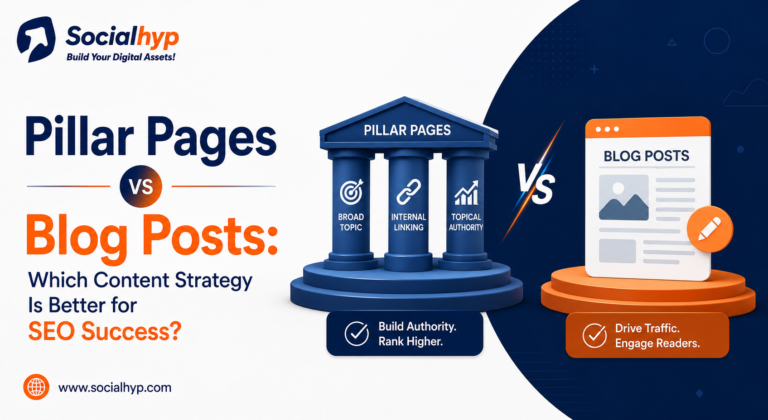
Pillar Pages vs Blog Posts
Share :

What is a Pillar Page?

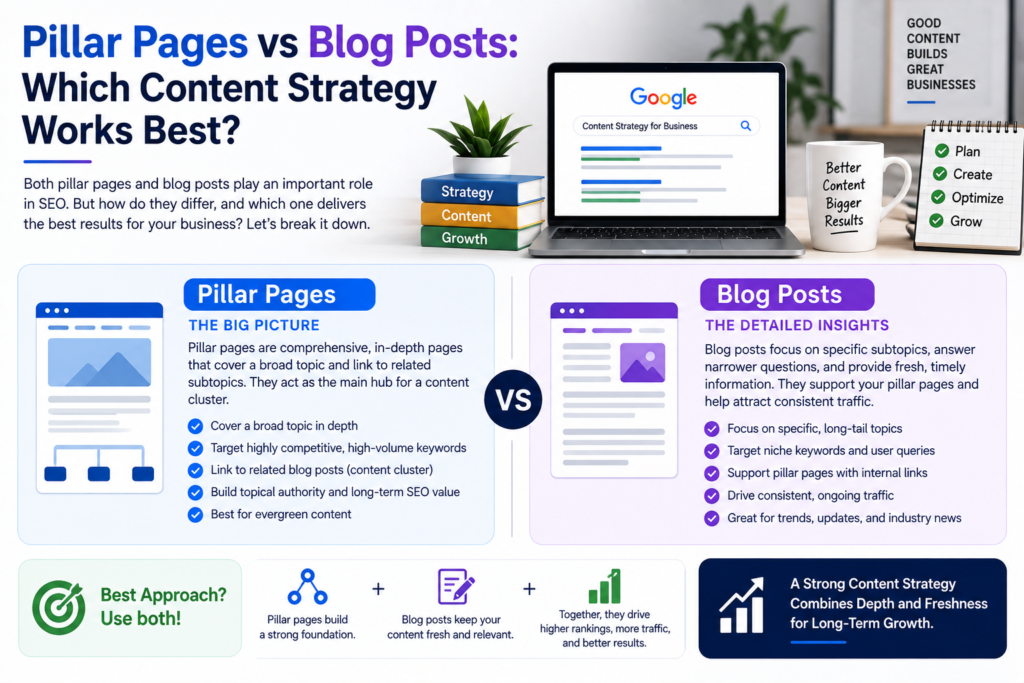
A pillar page is a large resource page. It covers a broad topic in detail and links out to related articles.

In marketing, these main pages are often called cornerstone content. They help build your topical authority online.

Key Features:
  • Broad Topics: They cover an entire topic or service area.
  • Long Length: They often range from 2,500 to 5,000 words.
  • Main Keywords: They target popular and competitive search terms.
  • Hub Links: They rely on internal linking to guide readers to specific posts.

For example, a main page might cover social media strategy. It touches on channels, tools, and graphics in one place.

What is a Blog Post?

A blog post focuses on one specific question or topic. While a main page offers an overview, a blog post gives direct answers.

Regular posts make up most of a site. They answer quick questions and bring in active readers.

Key Features:
  • Specific Focus: Addresses one narrow concept or how-to guide.
  • Shorter Length: Usually ranges from 800 to 2,000 words.
  • Targeted Keywords: Aims for specific phrases with lower competition.
  • Supporting Role: Links directly back to your larger main page.

For example, a supporting article might cover five free scheduling tools. This gives readers direct, clear steps to take action.


Direct Comparison: Pillar Pages vs Blog Posts

Understanding Pillar Pages vs Blog Posts helps you choose the right tool for your goals.

Feature

Pillar Page

Standard Blog Post

Topic Scope

Broad overall view

Narrow and focused

Target Keywords

Competitive main terms

Long specific phrases

Average Word Count

2,500 to 5,000 words

800 to 2,000 words

Link Role

Main hub linking out

Supporting page linking back

Primary Goal

Build site structure

Capture quick search traffic

How Pillar Pages and Blog Posts Work Together

Comparing Pillar Pages vs Blog Posts does not mean choosing one over the other. They work best as a team in your blog strategy.

Great sites connect these formats using content clusters and topic clusters.

Your main page acts as the middle hub. Supporting articles act as spokes coming off that hub.

  • Smart internal linking connects every short post to the main page.
  • Search engines read these links easily. They quickly see that you know your topic well.
  • This setup helps pass link value upward, strengthening your overall topical authority.

Which Strategy Works Best for You?

Choosing between Pillar Pages vs Blog Posts depends on your current site size and goals.

New Websites

Start with focused blog posts. Target simple, specific questions to earn early traffic and build trust.

Existing Websites

Group your old posts under one big main page. This cleans up your site structure and stops your pages from competing with each other.

The Balanced Approach
  1. Pick one main topic for your business.
  2. Write a broad page to cover that main topic.
  3. Write five to ten short posts on smaller details.
  4. Link every short post back to the main page.

Simple Steps to Build a Content Cluster

Step 1: Find Good Keywords

Find broad search terms for your main pages. Collect simple questions for your short posts.

Step 2: Write the Main Page

Create an easy main page. Define basic ideas and leave space to link to smaller topics.

Step 3: Write Supporting Posts

Draft short posts that answer specific questions. Give clear steps and helpful tips.

Step 4: Add Links

Link supporting posts back to the main page. Link related short posts together to keep readers on your site.

Final Thoughts

The debate over Pillar Pages vs Blog Posts comes down to balance. Using both formats together gives you the best results.

To make your website easy to use you should build hubs. These central hubs need to be supported with posts that are not too long. You have to link these hubs clearly so people can find what they are looking for.

Search engines will also be able to index your hubs and the short posts that support them. When people visit your website they will get answers to their questions because of your central hubs and short posts.

👉 Visit Socialhyp.com and start your digital transformation today!

Frequently Asked Questions (FAQs)

A main page covers a broad topic, while a blog post answers one specific question.

Share This Post :